
Ichihara Lab.
研究室紹介Laboratory
戻るIchihara Lab.
戻る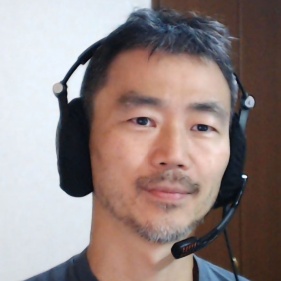
Welcome to the Ichihara Lab.
Background - why we need statistics today
Everyone knows that our society is undergoing rapid changes. Technological advancement, economic trends, and cultural shifts.
However, true understanding starts with overcoming that "we all know that" perception. Despite perceived abundance of information about anything thinkable, we often find ourselves having little idea what implications the observed changes have on health and well-being of people. We are trained to believe we know something, just by consuming a superficial summary created by someone anonymous who takes no responsibility. Traditional education and journalism seem to be replaced by contents curated by algorithms that push you further and further inside a bubble. No platforms seem successful in building shared understanding across generations and social groups. There seems to be no alternative to asking conversational AI and Web search, provided by commercial companies with their own agenda. Different groups of people just have different views. Social division is unbreakable. The truth is dead.
This is the context that necessitates for tomorrow's public health leaders to build strong "data science" skills. For building momentum for change, we need compelling storytelling and objective facts. You will need not only to draw insights from existing data, but also design systems that collect meaningful data while respecting privacy, and contribute to building a better society.
Statistics, along with epidemiology, is an old yet still evolving system of knowledge that empowers anyone who aspires to contribute to positive change. The truth is not dead, yet.
Self-introduction
Ichihara teaches statistics at SHI, with other faculty members. He is also a researcher in medicine and public health, specialist in research methodology, physician (cardiologist) and an ex-business person.
Teaching and research outside SHI
Ichihara has several appointments outside SHI. Specifically, through cross-appointment arrangement between SHI and the University of Osaka, he currently works at the Data Coordinating Center (DCC), the Department of Medical Innovation of the University of Osaka Hospital, as an Associate Professor. The DCC provides statistics and data management services for diverse range of clinical research, including regulatory-grade clinical trials, pragmatic clinical trials for generating evidence to guide clinical decisions, and observational studies. Ichihara is also involved in building multi-institutional infrastructure that facilitate hybrid clinical research involving secondary use of administrative data, primary data collection, and randomization/intervention.
Research at the Ichihara lab
Our research focuses on the following areas.
Methodology research
・Causal inference, heterogeneous treatment effect
・Missingness, sparse data
・Adaptive platform trials in acute care
・Machine learning for tabular data
・Global collaborative research
Clinical research
We promote both observational studies (retrospective and prospective) and clinical trials, with expertise in the following areas:
・Cardiology. Invasive and non-invasive
・High-risk surgeries, intensive care, and stroke
・Rehabilitation and long-term care for the elderly
"ME-BYO Starts Young" and digital well-being research
We are starting new research projects related to ME-BYO and digital well-being.
Why digital well-being?
We strive to elucidate risk factors and early signs of health issues that arise from today's living environment around young adults, adolescents, and kids.
We are digitally connected around the clock, yet often find ourselves emotionally isolated. We often spend more time watching screens than talking to friends. We fight ads more often than cockroaches. We try to make our work more efficient by substituting in-person meetings with emails, chat tools, and video conferences. We no longer have to read boring newspapers or watch preaching TV news, as we found ways to receive only "good" versions of the truth within our palm.
We apparently chose all these while we didn't know their consequences. Embracing new technologies requires new pieces of knowledge, new tools, and possibly new regulations, little of which seems to arrive soon. We still live in a world where digital media is not as mature as today's cars, and adolescents and kids may be affected more than most of adults are aware.
Our aim is to build and share better understanding on the well-being of people in relation to the contemporary social landscape characterized by digital technology, for ultimately designing societies and digital resources optimized for people's welfare.
Population: holistic look on our life-long health
Different use of digital media lead to different health risks. While everyone's lifestyle differs and so their use of digital media, age and socioeconomic features serve as starting points for designing tailor-made advice. We focus on young adults, teenagers and children, because:
・They embrace new technologies early and fast
・They are in the process of physical, intellectual and mental development, which are important for their life-long health
・They are at relatively high risk of issues with mental health and relationship building
・Their perspectives are often underrepresented
A different view is warranted for senior adults.Many of them may not take full advantage of digital resources, and their health and well-being may be improved by identifying and filling such gaps.
Exposure / Intervention
Our life and society has changed in an unprecedented pace in the last decades, as result of multiple factors, including technological advancement, economic trend, and cultural shift. While everyone is aware of such change, their implications are poorly understood. In addition to traditional socioeconomic factors, e.g., occupation, income, and marital status, we focus on "digital" socioeconomic factors, such as:
・Exposure to digital devices in general, e.g., daily screen time, age of first smartphone possession
・Dependence on digital devices/media for relationship building
・Consuming contents on SNS and playing smartphone games
・Ad-exposure-maximizing algorithms on SNS and other digital platforms, e.g., Instagram
・Features of "Parental Control" for adolescents and children
・Involvement of parents (guardians) and teachers for establishing rules and routines
Outcomes
Based on the broad definition of health, as embraced by the World Health Organization (WHO), we focus on health outcomes as follows:
・Mental health and social relationship
・Physical development and functioning, e.g., visual acuity, muscle strength, cardiovascular capacity
・Views on divisive topics
・Academic performance and work productivity
Methods and data sources
From cross-sectional studies, cohort studies to interventional studies and "Big Data" approaches, public health studies have been expanding its scope by incorporating new types of data and study designs. We aim to incorporate even more diverse data, including digital traces of our device use.
Teaming
Powerful knowledge can be built when expertise in the domain and method are combined. We work with experts in education, children's health, and mental care, and seek to further expand our network.
Quality of health services
Despite advances in medical technology, inequality in quality of healthcare still exists across regions, institutions and practitioners. People's experience is mixed as to safety, effectiveness, and patient (and family)-centeredness of healthcare.
Most high-level "reform" efforts on healthcare services focus on cost control and careful introduction of new medical technologies, leaving poor quality of care untreated.
Students may explore issues of healthcare quality, including that of long-term care, through empirical research projects.
Opportunities that we offer for your thesis project
Other than working on "ME-BYO Starts Young" and digital well-being research, we provide the students with opportunities to work on various practical issues in applied statistics as a secondary project.
Most thesis projects involve quantitative analysis and can be leveraged to solidify your conceptual understanding and practical skills in statistics. This can be accomplished by setting up a secondary project based on the same research question, with support from the primary supervisor. Examples include:
Practical/advanced topics in applied statistics
・Sensitivity analysis for:
○ Complete case analysis for addressing missing data, e.g., multiple imputation
○ Propensity score matching for causal inference, e.g., IPW and alternative matching techniques
○ Model (e.g., logistic regression)-based causal inference, e.g., Machine Learning
○ Addressing competing outcomes in survival analysis, e.g., cumulative incidence rate
○ Estimating sampling error, e.g., bootstrapping
・Analysis of heterogeneous treatment effect
Statistical programming in R
For your thesis project, it's usually best to use the statistical tool that your primary supervisor has expertise on, which may be Stata. However, if you design and conduct data analysis from data import to result output, it doesn't take too much effort to reproduce such workflow in R, which gives you an opportunity to learn R programming.
Even if you already use R for your project, you can learn things like:
・Advanced data manipulation
・Advanced graphing
Bayesian statistics
Bayesian statistics offers a whole different approach, as opposed to "conventional" statistics (frequentist statistics). Learning Bayesian statistics lets you not only understand how to interpret results of Bayesian statistics-based studies, but finally fill the gap between your everyday thinking and the formal thought process you learned in the statistics course, and understand widespread misconception about conventional (frequentist) statistics.
Prerequisite
Students are encouraged to consult us, as well as their primary supervisor, as to possibly working on a statistics-related secondary project. In addition to their general fluency in statistics, timeline and relative complexity of quantitative analysis for your primary project are important consideration.
The SHI Statistics team
We, the Statistics team at SHI, will make sure students can obtain sound conceptual understanding on how statistics works, acquire practical skills for designing, handling, and analyzing data, and synthesizing argument combining such quantitative analysis with relevant narratives. We strive to make your journey as productive as possible, helping you learn how to learn outside the classroom, even outside the school.
Messages to the students
The students need to be aware of the following things before/during their learning statistics at SHI:
Both conceptual understanding and practical skills matter
Statistics-related courses at SHI are combinations of didactic teaching, classroom discussion, in-class practice, assignments (both required and optional), and exams. Through these, students need to acquire both conceptual understanding and practical skills.
Learn how to learn
We not only teach statistics, but also teach how to keep learning statistics, even after graduation. This is accomplished by:
1.Building a solid framework of knowledge, i.e., "bookshelf in your brain"
2.Finding a few specific books and Websites that you can refer to, and combine them with generic digital resources, especially, conversational AI and Web search.
Good luck and enjoy learning! 😁